
ChatGPT Ads: How it works, costs, and how to advertise in 2026 is a critical question for brands looking to reach consumers within AI-powered conversations. This emerging advertising model allows businesses to connect with users as they explore products, compare solutions, and make decisions, moving beyond traditional search queries or social media feeds.
As conversational AI becomes an increasingly important part of how people discover information, businesses are beginning to recognize the potential of ai chatbot cost in environments where users actively express their needs. From researching software and comparing products to planning purchases and evaluating services, conversations with AI assistants can reveal valuable contextual signals about consumer intent.
OpenAI began testing advertisements in ChatGPT in February 2026, initially introducing sponsored placements for eligible users in the United States. Since then, the company has expanded its advertising pilot, introduced a self-service Ads Manager, and developed additional bidding and measurement capabilities. These developments mark an important step toward integrating advertising into conversational AI experiences.
For marketers, however, the opportunity comes with practical questions. How do ChatGPT Ads work? Where do advertisements appear? How much does advertising cost? Can businesses target specific audiences? And what strategies can help advertisers achieve meaningful results?
This guide provides a comprehensive overview of ChatGPT Ads in 2026, covering the advertising model, campaign formats, pricing, targeting, setup procedures, optimization techniques, privacy considerations, and the potential impact on the future of digital marketing.
1. Understanding ChatGPT Ads: How it works, costs, and how to advertise in 2026
ChatGPT Ads are paid advertising placements displayed within the ChatGPT experience. They enable businesses to promote products, services, and solutions to users whose conversations indicate a potential interest in relevant offerings.
Unlike traditional display advertisements, which typically appear alongside articles, videos, or social media content, ChatGPT Ads are designed for a conversational environment. Their relevance is determined by the relationship between a user’s current context and the product or service being advertised.
For example, someone asking ChatGPT about project management software for a growing team may encounter an advertisement for a relevant business solution. Similarly, a user exploring home renovation options could see an ad from a company offering related products or services.
The goal is to introduce advertising at moments when users are actively exploring solutions, rather than interrupting unrelated activities.
How ChatGPT Ads Differ From Traditional Advertising
Traditional digital advertising often relies on predefined keywords, demographic segments, browsing behavior, and interest-based targeting. ChatGPT Ads introduce conversational context as an additional signal for determining advertising relevance.
This creates a different relationship between advertisers and potential customers. Instead of depending exclusively on explicit search terms, brands can potentially reach users based on the broader intent expressed through their conversations.
However, ChatGPT Ads are not simply another version of Google Search Ads or social media advertising. They operate within an interactive environment where relevance, clarity, and contextual alignment play important roles in the advertising experience.
2. How Do ChatGPT Ads Work?
Understanding the mechanics behind ChatGPT Ads is essential for businesses considering this emerging advertising channel.
OpenAI’s advertising system evaluates several signals to determine whether an advertisement is relevant to a particular conversation. These include the current chat context, the advertiser’s landing page, ad title and copy, advertiser-provided context hints, and selected personalization signals when users have enabled personalized advertising.
2.1. Contextual Ad Matching
Contextual matching is one of the defining characteristics of ChatGPT Ads.
Rather than depending solely on exact keyword matches, the system considers the broader meaning and intent of a conversation.
For instance, a user asking, “What should I look for when choosing accounting software for a small business?” may be exploring a category of solutions without mentioning a specific brand.
An advertisement for relevant accounting software could therefore be considered even if the user has not searched for that company’s name.
This approach creates opportunities for businesses to reach potential customers during the research and consideration stages of the customer journey.
2.2. Ad Selection and Delivery
ChatGPT Ads use a relevance-weighted, second-price auction to select advertisements from eligible campaigns.
Advertisers establish maximum bids at the ad-group level, while the system considers relevance and expected outcomes when determining which ads to deliver.
Businesses can also provide contextual hints describing the conversations, topics, or keywords where their products may be relevant.
These hints help guide ad matching but do not function as exact-match keywords or guarantee placement in specific conversations.
2.3. Where Do ChatGPT Ads Appear?
ChatGPT Ads appear below the end of a response and are visually separated from the assistant’s organic answer.
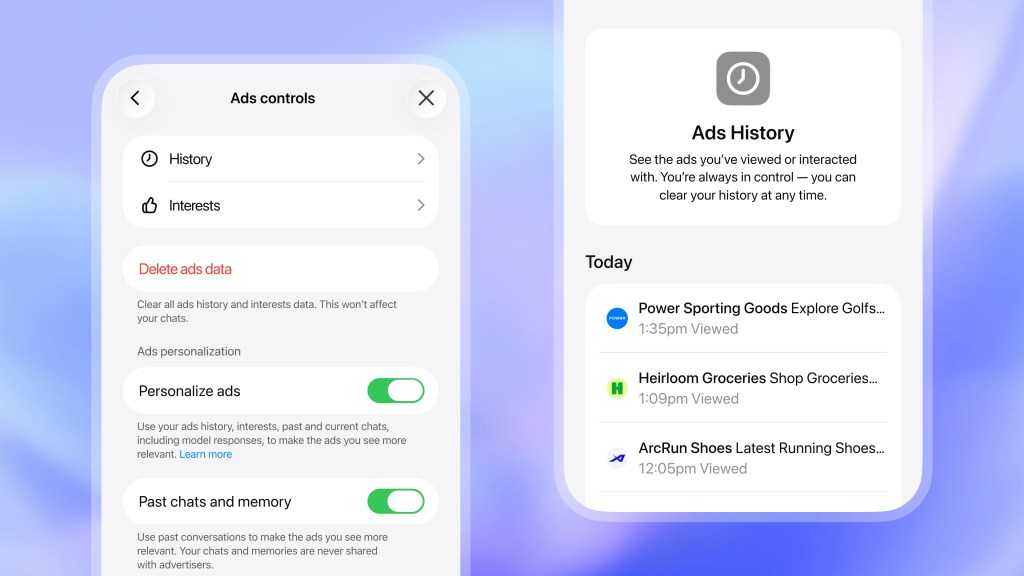
An advertisement may contain:
- Advertiser name and logo.
- A concise headline.
- Descriptive advertising copy.
- An image or creative asset.
- A destination URL linking to the advertiser’s landing page.
This placement is designed to make sponsored content recognizable without confusing it with ChatGPT’s generated responses.
The distinction is particularly important in conversational environments, where users may rely on AI assistants for research, explanations, and recommendations.
2.4. Do ChatGPT Ads Influence AI Responses?
No. OpenAI states that advertisements do not influence the answers generated by ChatGPT.
Advertisers cannot pay to change, rank, or modify the assistant’s responses. Paid placements operate separately from the conversational model and are clearly identified as sponsored content.
For businesses, this means that purchasing advertising does not guarantee favorable mentions in organic AI-generated answers.
It also reinforces the distinction between paid advertising and unpaid brand visibility within AI-powered discovery experiences.
3. ChatGPT Ads Formats and Campaign Objectives
ChatGPT Ads support different campaign objectives designed around reach, traffic, and conversion measurement.
Choosing the right objective is an important first step because it determines how a campaign is optimized, how advertising costs are calculated, and which performance metrics matter most.
3.1. Views Campaigns
Views campaigns focus on increasing advertising exposure and brand visibility.
They use a cost-per-thousand-impressions (CPM) bidding model, making them suitable for businesses that want to introduce products, establish awareness, or reach relevant audiences at scale.
Potential applications include:
- Introducing a new SaaS product.
- Promoting a technology brand.
- Building awareness for a new service.
- Supporting product launches.
- Expanding visibility within a specific market.
Although impressions provide a useful measure of exposure, they do not necessarily indicate whether users have developed an interest in the advertised product.
Businesses should therefore evaluate reach alongside engagement and downstream performance.
3.2. Clicks Campaigns
Clicks campaigns are designed to generate traffic to an advertiser’s destination page.
They use cost-per-click (CPC) bidding, allowing businesses to optimize for users who actively engage with advertisements.
This objective may be relevant to companies seeking to encourage users to explore product features, read educational content, compare solutions, or visit a landing page.
Common applications include:
- Driving traffic to product pages.
- Promoting free trials.
- Generating website visits.
- Increasing engagement with service pages.
- Supporting content marketing campaigns.
However, clicks should not be treated as the final measure of campaign success. Traffic quality and conversion behavior remain important considerations.
3.3. Conversions Campaigns
Conversions campaigns focus on optimizing delivery toward selected, supported conversion events.
These events may include actions such as registrations, purchases, or other measurable outcomes, depending on campaign eligibility and tracking configuration.
Eligible advertisers can select supported billing approaches, including optimized cost per click (oCPC) or optimized cost per thousand impressions (oCPM).
Importantly, conversion-optimized campaigns are not necessarily billed per conversion. Billing is based on the selected click or impression model.
For businesses focused on measurable growth, conversion optimization can help connect advertising activity with meaningful business outcomes.
However, reliable tracking must be established before launching these campaigns. Incomplete or inaccurate measurement can make it difficult to assess performance and allocate budgets effectively.
4. ChatGPT Ads Pricing: How Much Does Advertising Cost?
One of the most common questions among advertisers is how much ChatGPT Ads cost.
Unlike platforms with universally published rate cards, ChatGPT Ads use an auction-based pricing system. Actual costs depend on campaign objectives, maximum bids, competition, relevance, and delivery conditions.
OpenAI supports impression-based and valid-click billing, while its Ads Manager provides bidding and performance controls.
4.1. Cost Per Mille (CPM)
CPM refers to the cost of one thousand advertising impressions.
It is commonly associated with campaigns focused on reach and visibility.
The calculation is:
CPM = (Total Advertising Spend / Total Impressions) × 1,000
For example, if a campaign spends $200 and generates 50,000 impressions, its CPM is $4.
This example illustrates the calculation only and does not represent an official ChatGPT Ads rate.
4.2. Cost Per Click (CPC)
CPC refers to the amount paid for a valid advertising click.
The calculation is:
CPC = Total Advertising Spend / Total Valid Clicks
OpenAI recommends starting with a maximum CPC bid of $3–$5 for CPC campaigns. This is a suggested starting bid rather than a guaranteed average cost or fixed platform-wide price.
Actual CPC may vary depending on auction conditions, relevance, competition, and campaign settings.
Advertisers should use early campaign data to assess whether their bids are competitive and whether the resulting traffic justifies the expenditure.
4.3. Cost Per Acquisition (CPA)
CPA measures the cost of generating a desired conversion.
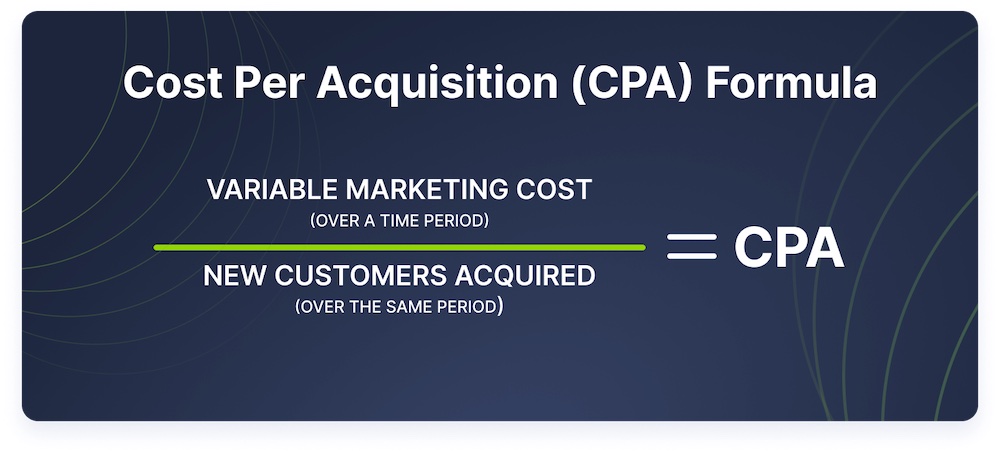
The calculation is:
CPA = Total Advertising Spend / Total Conversions
For example, if a business spends $500 and generates 25 qualified leads, its CPA is $20 per lead.
CPA is particularly useful for businesses that need to connect advertising expenditure with tangible outcomes.
However, a low CPA does not automatically indicate a profitable campaign. Businesses should also consider lead quality, conversion rates, customer lifetime value, and revenue generated.
4.4. Factors That Influence ChatGPT Ads Costs
Several factors can affect advertising costs and campaign delivery:
- Advertiser bids: Higher maximum bids may improve competitiveness in certain auctions, although bids alone do not guarantee placement.
- Relevance: Ads that align closely with conversational context may be more suitable for delivery.
- Campaign objective: Reach, click, and conversion campaigns use different optimization approaches.
- Competition: The number of eligible advertisers competing for relevant placements can influence auction outcomes.
- Creative quality: Clear and useful messaging can support stronger engagement.
- Landing page experience: A relevant, accessible destination helps users evaluate the advertised offering.
- Budget and pacing: Campaign budgets influence how advertising spend is distributed over time.
Businesses should evaluate costs alongside conversion quality, customer acquisition economics, and long-term customer value.
5. How to Set Up a ChatGPT Ads Campaign
Businesses can begin the advertising process through the official OpenAI advertising website.
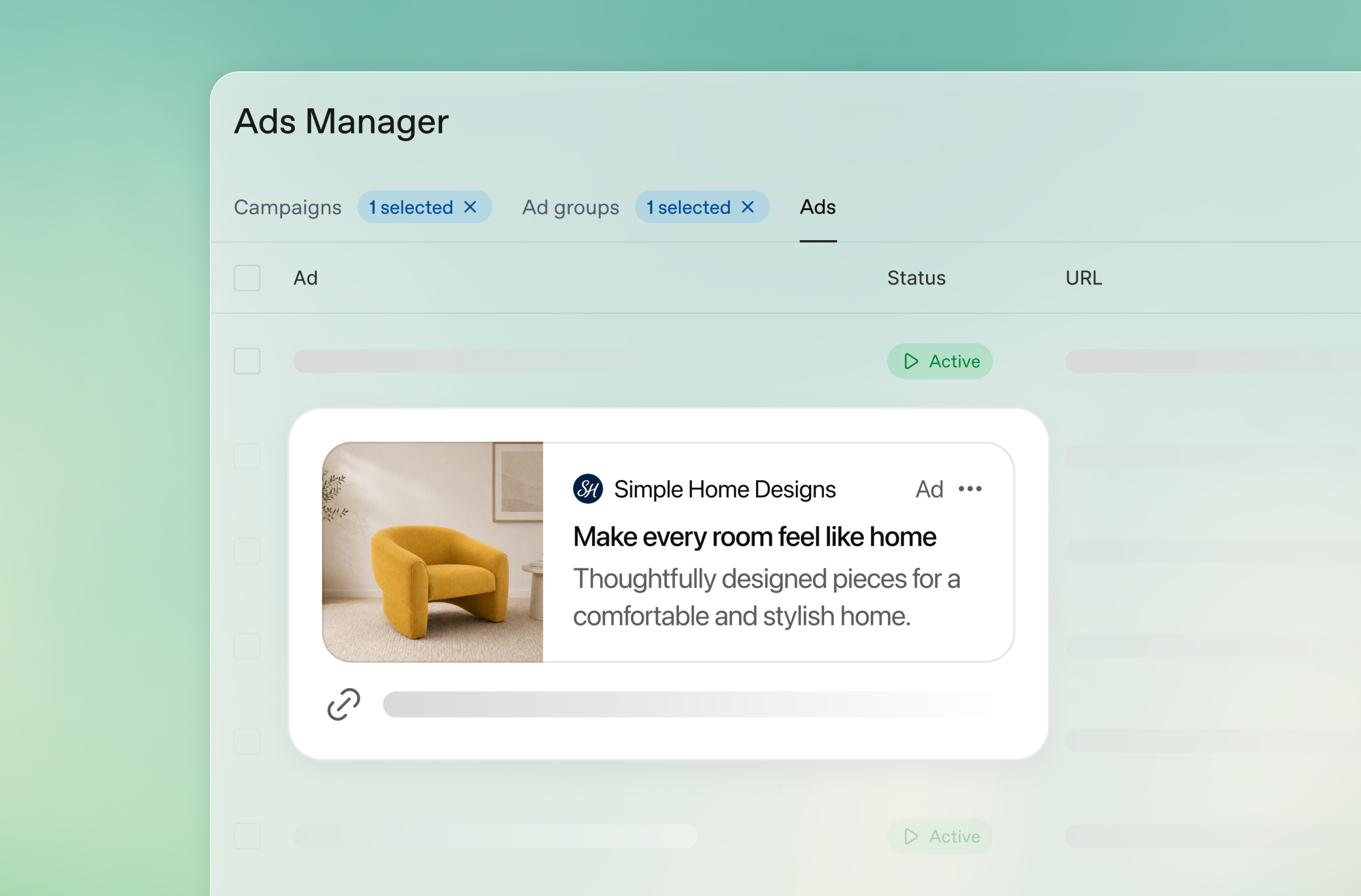
The self-service Ads Manager allows eligible advertisers to create accounts, configure campaigns, manage advertising assets, and review performance.
Step 1: Check Ads Manager Availability
Visit the official platform:
Review the current country availability and advertiser eligibility requirements.
Availability can change as OpenAI expands its advertising platform. Creating an account or registering interest does not automatically guarantee access in an unsupported market.
Step 2: Create an Advertising Account
After confirming eligibility, complete the account setup process.
Businesses should ensure that their advertising account information, billing details, and authorized users are configured correctly.
For organizations with multiple team members, access permissions should be assigned according to responsibilities.
Step 3: Define Campaign Objectives
Before creating advertisements, identify the intended outcome.
Consider the following questions:
- Is the campaign designed to increase brand awareness?
- Does the business need more website traffic?
- Is the primary objective lead generation or sales?
- Which conversion events can be measured reliably?
- What business result would justify the advertising investment?
A clear objective helps determine the appropriate campaign type, budget, creative direction, and reporting framework.
Step 4: Configure the Campaign and Ad Group
Set up the campaign objective, budget, schedule, and relevant ad-group settings.
Depending on account eligibility and available features, advertisers can configure additional settings such as geographic targeting, platform selection, and custom audiences.
At the ad-group level, businesses can provide contextual hints describing where their products or services may be relevant.
These hints should reflect genuine use cases rather than an excessively broad collection of unrelated keywords.
For example, a project management platform might identify conversations involving team collaboration, task tracking, workflow automation, and project planning.
Step 5: Create Ad Creatives
Develop multiple variations of headlines, descriptions, and creative assets.
Clear, specific, benefit-focused advertising copy helps users understand why an offering may be relevant to their needs.
A useful structure includes:
- Headline: Identify the product or core benefit.
- Description: Explain who the offering serves and how it helps.
- Creative: Use an image that reinforces the message.
- Landing page: Provide relevant information and a clear next step.
Each variation should introduce a distinct value proposition rather than repeating the same message with minor wording changes.
Step 6: Set Bids and Budgets
Choose the appropriate bidding approach based on the campaign objective.
Advertisers can select a daily budget or a campaign-total budget, depending on their planning requirements.
For businesses new to the platform, a controlled initial budget can provide an opportunity to evaluate delivery, traffic quality, and conversion performance before increasing investment.
It is also important to understand how budget pacing works. A daily budget represents an average spending target over a seven-day period rather than a strict same-day spending limit.
Step 7: Configure Tracking and Measurement
Before launching, establish a measurement framework.
This may include:
- Setting up supported conversion events.
- Configuring the OpenAI Pixel or other eligible measurement integrations.
- Adding UTM parameters to destination URLs.
- Verifying analytics tools.
- Establishing baseline performance metrics.
Without reliable measurement, businesses may struggle to distinguish genuine advertising outcomes from superficial engagement.
Step 8: Review and Launch
Before publishing, verify:
- Ad copy accuracy.
- Brand consistency.
- Destination URL functionality.
- Landing page accessibility.
- Tracking configuration.
- Budget and bidding settings.
- Compliance with advertising policies.
Once launched, monitor campaign delivery and performance through Ads Manager.
6. How to Optimize ChatGPT Ads for Better Performance
Launching a campaign is only the beginning. Effective optimization requires continuous analysis of creative quality, relevance, audience intent, and conversion performance.
Because ChatGPT Ads operate within a conversational environment, advertisers should prioritize usefulness and contextual alignment rather than relying exclusively on traditional keyword-based tactics.
6.1. Develop Multiple Creative Variations
One of the key recommendations in OpenAI’s creative guidance is to build for coverage rather than relying on a single advertising message.
Businesses should develop different creative angles for the same offering.
For example, a SaaS company might test:
- A productivity-focused headline.
- A cost-efficiency message.
- A workflow automation benefit.
- A solution tailored to small businesses.
- A message highlighting integration capabilities.
These variations provide opportunities to identify which messages align with different user needs.
6.2. Write Benefit-Focused Copy
Generic advertising language often provides insufficient information for users evaluating a solution.
Instead of relying on vague statements such as “Transform Your Business,” explain the actual benefit.
Generic: “Discover the Future of Business Management.”
Benefit-focused: “Manage Employee Records, Leave Requests, and Team Workflows in One Platform.”
The second version gives users a clearer understanding of the offering and its potential relevance.
6.3. Align Advertisements With Landing Pages
An advertisement should accurately represent the destination page.
If the ad promotes a free trial, the landing page should explain how the trial works. If the ad highlights a particular feature, that feature should be easy to find after clicking.
A mismatch between ad messaging and landing page content can create confusion and reduce conversion opportunities.
Businesses should also ensure that landing pages load correctly, work across devices, and provide a straightforward next step.
6.4. Account for Reporting Delays
OpenAI notes that impressions, clicks, and CTR refresh approximately every 15 minutes, while spend insights may be delayed by 7–8 hours.

Therefore, a displayed spend of zero does not necessarily mean that no advertising costs have accrued.
Marketers should account for these reporting delays before making budget adjustments or interpreting early campaign results.
6.5. Optimize Based on Business Outcomes
Optimization should extend beyond advertising metrics to include the results that matter to the business.
For example, a B2B company may need to assess qualified leads, sales conversations, and pipeline contribution rather than focusing exclusively on website visits.
An e-commerce business may prioritize completed purchases, average order value, and return on advertising spend.
By connecting campaign data with business outcomes, advertisers can make more informed decisions about budget allocation and creative direction.
7. ChatGPT Ads and the Future of AI-Powered Marketing
The development of ChatGPT Ads reflects a broader shift in how people discover information and evaluate products.
As conversational AI becomes integrated into everyday activities, advertisers may need to rethink how they approach customer acquisition, content strategy, and brand visibility.
7.1. From Keyword Matching to Intent Understanding
Traditional search advertising is often structured around explicit queries.
Conversational advertising introduces a broader context in which users can describe problems, constraints, preferences, and goals in natural language.
This creates opportunities for businesses to communicate the practical value of their products rather than focusing exclusively on individual search terms.
However, contextual relevance should not be confused with unrestricted access to user information. OpenAI states that advertisers do not receive users’ conversations or personal details.
7.2. The Growing Importance of Conversational Discovery
Consumers increasingly use AI assistants to explore unfamiliar topics, compare alternatives, and understand complex decisions.
For marketers, this means that brand visibility may increasingly involve multiple touchpoints across search engines, social networks, websites, and AI-powered interfaces.
Businesses should therefore develop clear product information, accurate landing pages, and educational content that addresses real customer questions.
7.3. New Opportunities for Small and Medium-Sized Businesses
Self-service advertising tools can create opportunities for businesses that previously relied on larger advertising teams or agency partnerships.
However, access to an advertising platform does not automatically guarantee cost efficiency or strong results.
Small businesses still need clear positioning, appropriate budgets, reliable measurement, and a strong understanding of their target customers.
7.4. The Emergence of AI-Native Advertising Experiences
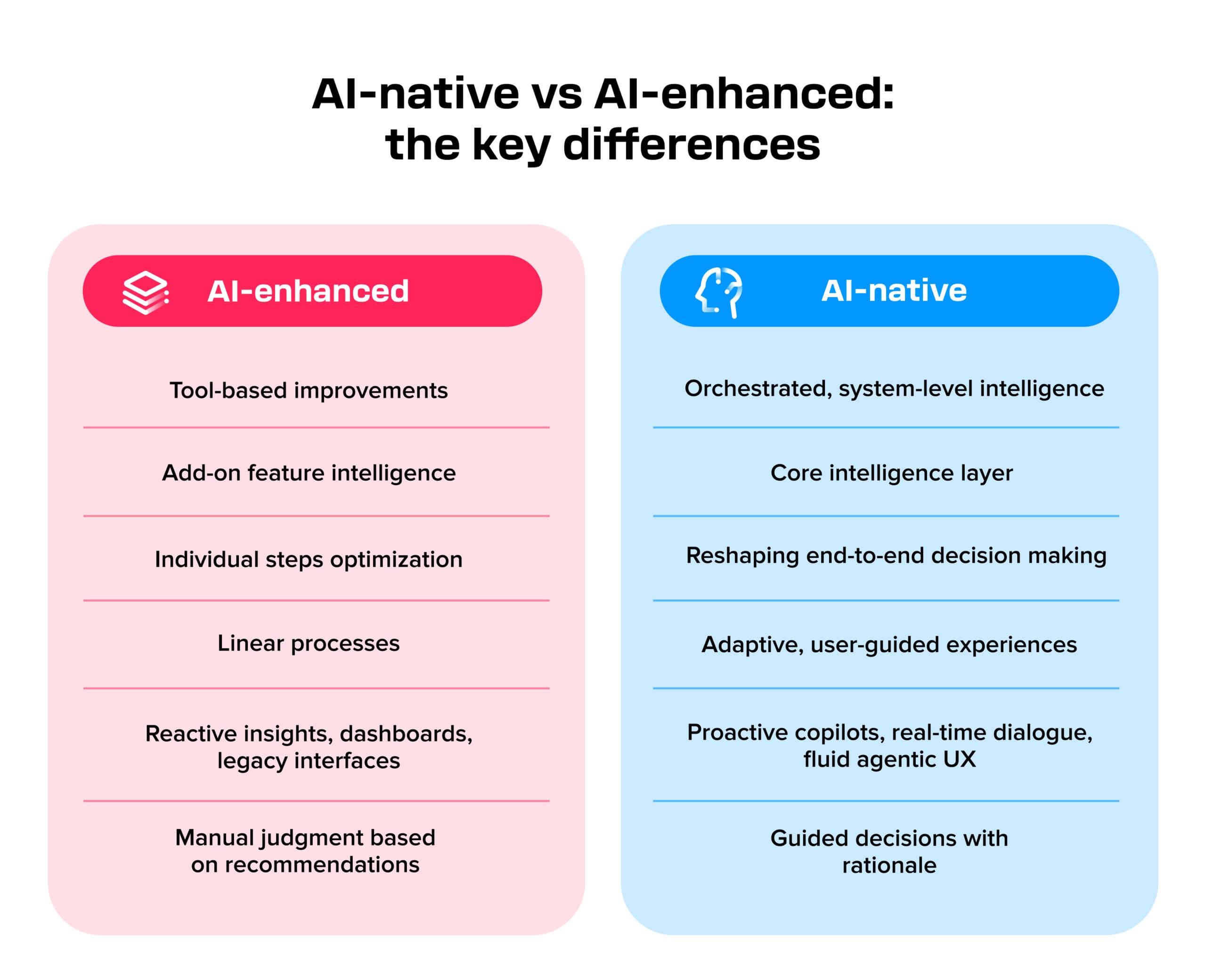
As AI advertising develops, the industry may move beyond conventional sponsored placements toward more interactive experiences.
These could include richer creative formats, improved measurement tools, and advertising experiences that allow users to explore products through additional conversational interactions.
The long-term adoption and performance of such formats will depend on user acceptance, transparency, privacy protections, and the quality of interactions.
For marketers, the most useful response is to monitor these developments while continuing to build strong fundamentals in positioning, creative strategy, and performance measurement.
Frequently Asked Questions
1. What are ChatGPT Ads?
ChatGPT Ads are paid advertising placements displayed below ChatGPT responses. They allow businesses to promote relevant products and services within conversational experiences where users are exploring options or evaluating solutions.
2. Are ChatGPT Ads available to everyone?
No. Advertising visibility depends on account type, location, and eligibility. OpenAI states that ads may appear for eligible users on Free and Go plans, while Plus, Pro, Business, Enterprise, and Edu plans do not include ads. Accounts identified as belonging to users under 18 are also excluded from advertising.
3. How much do ChatGPT Ads cost?
ChatGPT Ads use auction-based pricing with impression-based and valid-click billing options. OpenAI recommends an initial maximum CPC bid of $3–$5 for CPC campaigns, but this is guidance rather than a fixed advertising price. Actual costs vary according to campaign settings and auction conditions.
4. Can advertisers target specific ChatGPT conversations?
Advertisers can provide contextual hints describing conversations, topics, or keywords where their offerings may be relevant. These hints guide ad matching but do not guarantee placement in exact conversations. Additional targeting options depend on account eligibility and available campaign features.
5. Do ChatGPT Ads affect organic AI recommendations?
No. OpenAI states that advertisements do not influence ChatGPT’s generated answers. Paid placements operate separately from the conversational model and are clearly labeled.
Can advertisers access user conversations?
No. Advertisers do not receive users’ chats, chat histories, memories, or personal details. They receive aggregated, non-identifying performance information, such as impressions and clicks.